Is Your Car Trying to Tell You Something? 7 Suspension Warning Signs You Shouldn’t Ignore
When you sit behind the wheel of your car every day, you become intimately familiar with its personality. You know exactly how the engine sounds when it turns over, how the brakes feel as you slow down for a red light on Tiogue Avenue, and how the steering responds as you navigate the winding roads of Coventry. Because you know your vehicle so well, you are actually its first line of defense against major mechanical failures.
In our previous look at early vehicle diagnostics and repair, we discussed how catching small issues today prevents expensive headaches tomorrow. Perhaps nowhere is this “early detection” philosophy more critical than with your car’s suspension system.
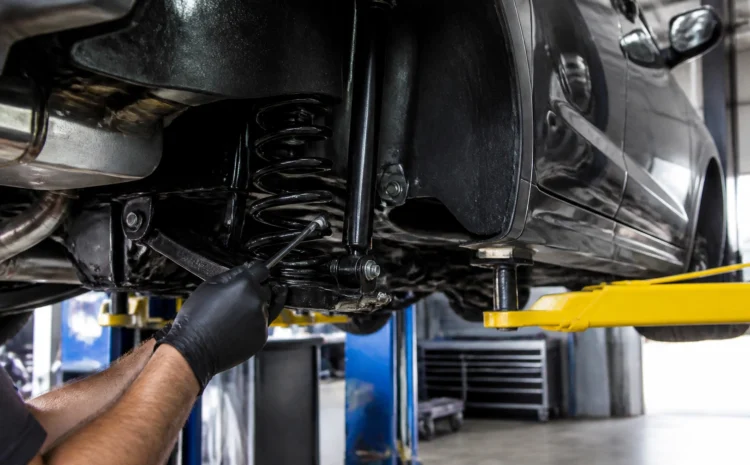
Your suspension isn’t just there to make your ride comfortable; it’s a vital safety system that keeps your tires in contact with the road, manages weight distribution during braking, and ensures you stay in control during emergency maneuvers. When components start to wear out, your car will start “talking” to you through subtle changes in feel and sound. Here are seven suspension warning signs you shouldn’t ignore.
1. A Noticeably Rougher or Bumpier Ride
One of the earliest indicators that you might need a local auto mechanic to look at your suspension is a change in ride quality. Most modern vehicles are designed to absorb the imperfections of the road, giving you a smooth, controlled experience. If you suddenly feel like you’re riding in a stagecoach: feeling every crack, pebble, and manhole cover in the pavement: your shocks or struts are likely wearing out.
These components contain fluid or gas that dampens the energy from road bumps. When they fail, they can no longer “cushion” the impact, leaving the vehicle’s springs to do all the work. This leads to a harsh, jarring ride that isn’t just uncomfortable; it’s a sign that your vehicle’s ride quality and safety are being compromised.
2. “Nose-Diving” During Braking
When you apply the brakes, do you feel the front end of your car dip significantly toward the ground? This is known as “nose-diving,” and it’s a classic symptom of worn-out front shocks or struts. Similarly, you might feel the rear of the car “squat” excessively when you accelerate or feel the body roll from side to side during a corner.
This happens because the suspension can no longer effectively manage the weight transfer of the vehicle. This isn’t just a comfort issue: it’s a safety hazard. Excessive nose-diving can actually increase your stopping distance by as much as 20%, which could be the difference between a safe stop and a fender bender. If your car feels like it’s “swimming” when you hit the brakes, it’s time for professional car suspension repair.
3. Pulling or Drifting to One Side
If you find yourself constantly fighting the steering wheel to keep your car traveling in a straight line, your first instinct might be to blame the tires or the alignment. While a bad alignment is often the culprit, worn suspension components: like control arm bushings or ball joints: can also cause your vehicle to “wander” or pull to one side.
When these parts lose their structural integrity, the wheels are no longer held at the precise angles required for stable driving. If you notice this drifting sensation, especially when driving on a flat, straight road, seeking a comprehensive vehicle diagnostics and repair service is the best way to pinpoint whether the issue is a simple alignment or something deeper in the suspension.

4. The “Bounce Test” Failure
You don’t always need to be driving to tell if your suspension is failing. There is a simple “home diagnostic” you can perform called the bounce test. While the car is parked on a level surface, go to the front of the vehicle and lean your weight heavily on the hood to push the corner down. Release it and watch how the car responds.
A healthy suspension should rebound once and settle immediately. If the car continues to bounce two or three times, your shocks or struts are severely worn. Repeat this at all four corners. If any corner feels “bouncy” or soft, it’s a clear signal that the damping components are no longer doing their job and need professional attention.
5. Uneven Tire Wear (Cupping)
Take a look at your tires. If you notice that the tread is wearing down evenly across the surface, your suspension is likely doing its job well. However, if you see “cupping” or “scalloping”: which look like smooth, worn-out divots or wavy patterns around the circumference of the tire: you have a suspension problem.
Cupping occurs when a worn shock or strut allows the tire to literally “bounce” down the road rather than maintaining constant, firm contact. Every time the tire hits the pavement, it scrubs off a bit of rubber. This not only ruins your tires prematurely but also reduces your traction. Since tires are a significant investment, catching these signs you need a tire rotation or suspension check early can save you hundreds of dollars in replacement costs.
6. Unusual Clunks, Squeaks, or Knocks
Your car’s suspension is a complex network of metal parts connected by rubber bushings and ball joints. Over time, these rubber components can dry out, crack, or tear, leading to metal-on-metal contact.
If you hear a loud “clunk” when you go over a speed bump or a “squeak” like a rusty door hinge when you turn the steering wheel, your car is telling you that a joint or bushing has failed. Ignoring these sounds can lead to more catastrophic failures, such as a ball joint snapping, which can cause you to lose control of the vehicle entirely. As a local auto mechanic who has served Coventry for nearly a century, we’ve seen how a small squeak today can turn into a major repair tomorrow if left unaddressed.
7. Visible Leaks or One Corner Sitting Low
Finally, a visual inspection can often reveal the problem. If you look behind your wheels and see that the shocks or struts look “greasy” or “oily,” it’s a sign that the internal seals have ruptured and the fluid is leaking out. Once the fluid is gone, the component is effectively useless.
Additionally, if you notice your car is leaning to one side or one corner sits significantly lower than the others when parked on level ground, you likely have a broken or collapsed spring. A broken spring is a serious safety concern, as it can puncture a tire or cause the vehicle to handle unpredictably in a turn.
Why Trust Moore’s Motor Service for Your Suspension Needs?
Since 1927, Moore’s Motor Service has been the trusted name for auto repair in Coventry, Rhode Island. As a fourth-generation, veteran-owned family business, we understand that our reputation is built on honesty and quality work. We don’t just fix cars; we look after our neighbors.
Whether you’re driving a brand-new import or a domestic work truck that has seen better days, our team has the expertise to handle everything from routine maintenance to complex car suspension repair. We treat every vehicle that enters our shop as if it belonged to our own family, ensuring that you leave with a car that is safe, stable, and ready for the road ahead.
Conclusion: Don’t Wait for the “Big Bounce”
Your car’s suspension system is one of the most hardworking parts of your vehicle, silently absorbing thousands of impacts every mile. By paying attention to these seven warning signs: from nose-diving and rough rides to strange clunks and uneven tire wear: you can catch issues before they compromise your safety or lead to more expensive repairs.
If your vehicle isn’t handling the way it used to, or if you suspect something just “feels off,” don’t wait for the problem to get worse. Bring your vehicle to Moore’s Motor Service for a professional inspection. We’ll provide an honest assessment and get you back on the road with the confidence you deserve.
Ready to restore your car’s smooth ride? Contact Moore’s Motor Service today to schedule your suspension inspection and experience the professional care of Coventry’s longest-running family auto shop.